DeepSeek Harness: When Everything Really Is a Plugin
Ai Security NetworkTable of Contents
When we talk about AI agents, we almost always start with the model. Which model writes better code? Which one understands longer contexts? Which one solves more benchmark tasks? That is understandable, but it no longer tells the whole story. An agent is more than a language model. It needs tools, memory, sessions, permissions, a runtime environment, planning, logging, and some interface through which people can intervene.
That is exactly why I find the Developer Preview of DeepSeek Harness so exciting. DeepSeek summarizes the idea in one remarkably clear sentence: Everything is a plugin. It is not only additional tools that should be interchangeable. Models, skills, sessions, sandboxes, storage, agent loops, scheduling, and even the user interface are treated as plugins.
At first, this sounds like a technical design decision for developers. In reality, it makes a broader statement about the next phase of AI. If intelligence comes from the model but practical agency comes from the harness, then this second half must not become an opaque block controlled by a single provider.
The model provides intelligence. Only an interchangeable harness determines whom that intelligence serves and under which rules it may act.
The agent is more than its model
DeepSeek describes the formula very succinctly: agent equals model plus harness. The model processes language and produces decisions. The harness connects it to the real environment. It provides files, registers tools, manages state, starts subagents, executes commands, and decides which information returns to the context for the next model call.
A harness is therefore not merely packaging around a model. It determines what a model response can actually become. May the agent only output text, or may it modify a file? Can it see the entire repository or only one working directory? Does a command run directly on the host, in a container, or in a remote sandbox? Must a human approve an action? Does state persist across sessions? None of these are model properties. They are runtime decisions made around it.
From answering to acting
This distinction is barely noticeable in a simple chat. A question goes in and an answer comes back. But as soon as an agent works on a repository, handles tickets, accesses internal systems, or takes on long-running tasks, the harness becomes at least as important as the model. It translates a verbal intention into a sequence of real steps and feeds their results back to the model as new context.
This is where impressive demo technology either becomes a reliable tool or fails to do so. A very capable model with poor context, overly broad permissions, and unreliable session management remains a poor agent. It may reason brilliantly and still edit the wrong file, use outdated state, or fail to recover cleanly from an error. Conversely, a somewhat weaker model can be surprisingly useful in a well-designed runtime because it sees the right tools, operates within clear boundaries, and leaves a traceable record of its work.
Architecture becomes part of the result
DeepSeek Harness makes this layer visible. The Cordis kernel mounts plugins, resolves dependencies, and can remove components again. Capabilities are exposed as services. One plugin might implement a shell, another expose that shell as a model tool, and a third consume the tool in a workflow. Configuration can switch the concrete implementation without rebuilding the entire harness.
DeepSeek goes further than many platforms that merely allow a handful of extra tools as extensions. The model connection, tool registry, session log, and agent loop itself are plugins too. According to the architecture, there is no privileged core that must be patched for every extension. New behavior is mounted beside existing components, and removing a plugin can cleanly undo its registrations.
The idea itself is not entirely new. Operating systems, browsers, editors, and platforms have relied on modular components for decades. What is new is how consistently DeepSeek applies the principle to a complete AI agent. The agent architecture is no longer accepted as a fixed product, but becomes a set of decisions that an operator can change.
Why “everything is a plugin” is so appealing
The plugin concept shifts power away from a finished product and toward a composable runtime. I can replace a model provider without rebuilding my entire workflow. I can swap a local shell for a more strongly isolated implementation. I can use different storage, different session logic, or my own interface. Alongside its own model access, DeepSeek documents other providers and custom OpenAI-compatible endpoints.
Switching models without starting over
An agent therefore becomes infrastructure that I assemble for my environment. A small development team may need only file access, Git, and tests. A security team may also want network queries, isolated sandboxes, stricter approvals, and immutable logs. A company can use its own model gateway, while a private lab talks to a local open-weight model.
That matters strategically because models are changing extremely quickly. One provider leads in coding today, another may lead in long context or tool use tomorrow. In a closed product, changing the model often means changing the platform too. Sessions, rules, permissions, integrations, and workflows all have to be rebuilt. In a modular runtime, the model can remain a component that is exchanged for another provider or a self-hosted endpoint.
The switch will not be frictionless. Models differ in role formats, reasoning, tool calls, image support, and failure behavior. Their adapters must handle these differences properly. But that is precisely the value of a clean seam: the peculiarities of one provider do not spread uncontrolled through the entire product.
Interchangeable infrastructure, not interchangeable buttons
The separation between the definition, provider, and consumer of a capability is especially interesting. A Bash interface describes what the capability can do. A provider decides where and how commands actually run. Only another plugin turns it into a tool the model is allowed to call. Such seams matter because they create a clear point of control. Timeouts, isolation, approvals, and logging can be inserted there without reprogramming every agent loop.
The potential becomes obvious when several capabilities share the same execution environment. If filesystems and processes move from a local environment into a remote sandbox, the shell, terminal, and code navigation can move there together. The capability remains similar for the user while the security and operational framework underneath changes fundamentally. That kind of interchangeability is worth more than another button in an interface.
The runtime modes also show what DeepSeek intends. Standard mode provides the full coding agent. In Code mode, the model can orchestrate several tool calls through generated TypeScript code. Minimal mode reduces the environment to shell and editor for benchmarks. Creator mode supports exploring plugins and custom presets. Not every use case has to load the same enormous toolbox.
Profiles and bundles turn this into more than a loose collection of extensions. A profile can define an agent runtime for a specific purpose. You could have a lightweight profile for local development, a more restricted one for production systems, and a forensic profile with particularly extensive logging. The capabilities use the same building blocks, but their combination and boundaries match the respective risk.

Where the practical potential emerges
The architecture is exciting, but its value appears only in concrete situations. A plugin system is not an end in itself. It must make it possible to adapt an agent to real requirements more quickly without building a new platform for every use case.
From personal tool to corporate platform
An individual developer can begin with a local shell, a file editor, and a model. As soon as it becomes a team tool, additional requirements appear: centralized identities, separate workspaces, approval for critical actions, a model gateway, cost controls, persistent sessions, and an exportable audit trail. In a monolithic application, the vendor decides whether and when those capabilities arrive.
In a modular runtime, companies can add missing components themselves or replace existing providers. The agent does not need to be reinvented. The same interface and agent logic can use different models behind a corporate gateway, execute commands in an internal sandbox, and store sessions in company-controlled storage. That is the difference between a useful tool and a controllable platform.
Different trust zones from the same building blocks
Not every task deserves the same rights. An agent summarizing documentation does not need production access. An incident-response agent may need logs and network queries but must not change configuration. A deployment agent may execute changes, but should require tighter approvals, shorter tokens, and particularly clear logging.
Cleanly separated services and profiles can express this distinction in the runtime. The model does not have to understand every security detail and voluntarily comply with it. The environment technically determines which capabilities exist at all. For security, this is central: a capability that has not been mounted is not directly available to the model as a tool.
An ecosystem for specialists
No single vendor will simultaneously build the best sandbox, the best session store, every corporate integration, and every model adapter. An open plugin model allows specialists to solve exactly one layer well. A security vendor could provide a hardened execution environment. A storage project could offer tamper-resistant sessions. An internal platform team could connect approvals and identities to its own organization.
When these components fit together through stable interfaces, an ecosystem emerges instead of an ever-larger single application. This may be the greatest potential of DeepSeek Harness. DeepSeek does not have to win every use case. It is enough if the architecture becomes the place where others offer and combine their capabilities.
Traceability is not a minor detail
The second strong idea, alongside plugins, is the append-only session log. DeepSeek says that everything the model sees is recorded as an event. That includes system instructions, tool calls and results, context injections, and subagent planning. Resuming, branching, searching, and replaying are all based on the same event stream.
For developers, this is useful because a faulty run can be reconstructed. For security and operations, it is even more important. If an agent changes a file, launches a command, or sends data to a service, I need more than the final chat message. I must be able to establish what context was present, which tool was involved, and where a decision turned into an action.
In traditional applications, an error can often be traced back to an input and a deterministic code path. Agents are more difficult. A model can derive different intermediate steps from the same broad task, use tools in another order, and react to unexpected results. Without a complete history, all that remains is the claim that the agent decided something. That is insufficient for debugging or a security incident.
Making the event stream the source of truth creates another possibility: more comparable experiments. A session can branch at a specific point and continue with another model, a modified prompt, or different capabilities. Instead of comparing only which model writes the nicer answer, we can examine how a concrete change affects the same real working state.
For companies, this could eventually become a kind of change and incident log for agents. Who issued the task? Which policy was active? Which data did the model receive? Which action was approved? What result came back? These questions become important once agents no longer merely advise but trigger changes in real systems.
A log is not yet a finished audit trail. Retention, access control, integrity, sensitive content, and export still require careful design. A complete log can itself become a risk if it contains prompts, source code, tool results, or credentials. Even so, I like the fundamental decision: information visible to the model should not arrive through a hidden side channel, but through a reconstructable event stream.

Open source becomes a strategic weapon
The fact that this project comes from China makes it even more interesting. DeepSeek is not merely releasing model weights. It is visibly building several layers of the stack. DeepSeek V4 is available with weights and code under the MIT License. Now the likewise MIT-licensed Harness adds an open runtime for agentic work. Underneath it, Cordis even provides its own plugin and composition model.
This fits a development I described in my article about AI, security, and the struggle for the complete stack. China does not want to merely consume AI applications. Chinese companies are building models, inference software, hardware paths, and now the agent infrastructure above them. DeepSeek is moving at a pace that can no longer be explained in the West by the old image of a mere copying industry.
Open source is not only idealism in this race. It is distribution, trust through inspectability, and an accelerator for an ecosystem. Anyone who releases weights, code, and interfaces invites developers worldwide to find defects, build integrations, and turn that design into a de facto standard. An open harness may be strategically more valuable to DeepSeek than another closed chat interface because it remains relevant even when models from other vendors run inside it.
That is a remarkable point. DeepSeek is building a platform in which DeepSeek itself remains interchangeable. In the short term, this seems almost contradictory. Why would a model vendor make it easier to switch to a competitor? In the long term, that may be the stronger position. If developers build their agents, plugins, security rules, and sessions on this runtime, the harness becomes shared infrastructure. DeepSeek may lose individual model calls but gain influence over the architecture of the entire ecosystem.
Openness also accelerates learning. With a closed product, development of the core architecture remains largely with the vendor. An open project gets used in environments the original team could never fully anticipate. That produces bug reports, new adapters, alternative backends, and operational knowledge. In a young field such as agentic software, this feedback may matter more than a perfect first release.
This is precisely the clever side of the plugin approach. DeepSeek does not have to build every storage system, sandbox, and corporate integration itself. It provides an architecture into which others can insert those capabilities. As the ecosystem grows, every new integration benefits the core.
China is building not just a model, but a path around it
The geopolitical significance therefore lies in more than benchmark scores. A country or economic region does not become technologically sovereign merely because a strong model was trained somewhere. It needs hardware, inference software, development tools, interfaces, operational experience, and developers who build products on top. DeepSeek Harness is another building block in precisely that chain.
The Western narrative about Chinese technology often lags behind this development. Anyone who still sees China primarily as a low-cost imitator overlooks the speed with which original architectures are being released there and global developers are being addressed. DeepSeek does not have to lead every category forever. It is enough to keep the gap small, iterate quickly, and open its work so that others can build on it.
The gap to closed frontier models is shrinking
Open-weight models were long considered an interesting alternative for labs and special cases, while the truly powerful capabilities remained with a handful of closed providers. That view holds up less and less. The gap has not disappeared in every discipline, but it is closing faster than many expected.
DeepSeek places its V4 models directly beside current closed frontier models in its own evaluations. Depending on the benchmark, V4 Pro comes close, achieves comparable results, or remains visibly behind. There is no uniform outcome across software engineering, tool use, factual knowledge, and very difficult reasoning tasks. That is exactly why one should not declare a “winner” from a single table.
The more important point is the time gap. Capabilities that recently seemed like the exclusive advantage of the largest US labs now appear only a few months later in models whose weights can be downloaded, self-hosted, and examined. “Only a few months behind the frontier models” is not a scientifically measurable constant, but it describes quite well how short the lead of closed systems can now feel.
This also changes the economic meaning of a lead. If a closed model is ten percent better for a particular task, that may be decisive. But if an open model is good enough, runs on your own infrastructure, and can be integrated into your security zone, the overall calculation may still favor the open model. Control, data location, predictable costs, and customizability are part of performance too, even if they do not appear in a benchmark.
Hardware must not be forgotten. Openly available weights do not mean that a 1.6-trillion-parameter model runs comfortably in a server cabinet. DeepSeek V4 Pro is an enormous mixture-of-experts model. Even if only part of the parameters is active per token, memory, inference cost, and operations remain demanding. Openness removes the access barrier to code and weights, not the physical reality of large models.
Even so, the existence of those weights changes the market. Researchers can examine the model. Providers can deploy it on their own infrastructure. Communities can develop quantizations and runtime optimizations. Companies gain at least one alternative to complete dependence on a single API.
The competition is shifting as a result. Raw model intelligence remains important, but lasting value increasingly lies in data pipelines, evaluations, runtime, security, distribution, and integration into real processes. An open harness fits exactly into this shift. As models become more interchangeable, the platform that reliably gives them context, tools, and boundaries gains importance.
Open does not automatically mean trustworthy
For all the enthusiasm, it would be naive to equate “open source from China” automatically with sovereignty. Anyone using DeepSeek’s hosted service is still sending data to an external provider. Only a self-hosted model endpoint and a controlled harness truly change data sovereignty. Even then, provenance, build process, dependencies, and updates remain part of the supply chain.
Plugins intensify this responsibility. A plugin is not a harmless theme. It can register tools, access services, and execute code on the system. When installing from Git repositories, the DeepSeek documentation explicitly warns that approved build scripts can run outside the agent sandbox on the host. It recommends allowing only trusted sources and pinning dependencies to a specific commit.
That is exactly the right warning. An open plugin platform creates interchangeability, but also a new supply chain. Every additional provider may gain access to prompts, files, credentials, or executable tools. A compromised plugin needs no spectacular model jailbreak if it is already a legitimate part of the runtime.
Being able to inspect source code is an advantage, but it is not a security review. Someone must actually review the code, verify builds, pin versions, and control updates. As the plugin ecosystem grows, provenance therefore becomes almost as important as functionality. A useful plugin from an unknown source may be a greater risk than a missing feature.
For serious operation, I would therefore use only a small number of vetted plugins. Versions should be pinned, permissions separated, secrets managed outside configuration, and outbound connections controlled. Sandboxes must actually isolate, not merely be called sandboxes. The session log should be protected and checked for sensitive data. Above all, “everything is a plugin” must not end up meaning “every plugin can do everything.”
The long-term potential therefore also depends on governance. A good platform needs understandable provenance records, signed artifacts, reproducible builds, clear dependencies, and a way to restrict capabilities per profile. If DeepSeek and the community take these unglamorous foundations seriously, openness can lead to genuine control. Otherwise, the plugin promise will become a very large attack surface.
What I want to see from DeepSeek Harness
DeepSeek deliberately calls the project a Developer Preview and announces incompatible changes. This is a good time for reading, experimenting, and testing with non-critical data. It is not yet a reason to make central production workflows depend on it.
What matters next is whether the clean architecture develops into a resilient ecosystem. That requires signed releases, traceable plugin provenance, clear permission models, reproducible builds, and an update process that does not demand renewed trust with every change. It is equally important to see how well plugins from different providers actually combine while the project evolves rapidly.
I also want to see whether the promised interchangeability holds up in daily use. A model adapter is easy to swap on paper. In practice, models differ in tool calls, reasoning, context formats, image support, and failure modes. An open interface reduces these differences; it does not make them disappear.
Despite these reservations, DeepSeek Harness is one of the more interesting AI projects of the year for me. Not because it must already be the best coding agent. What is exciting is that a Chinese AI company is opening the layer above the model and turning it into a modular system. While other providers integrate their agents ever more deeply into closed platforms, DeepSeek is betting on an architecture in which even its own model is merely an interchangeable plugin.
My impression and the incredible pace
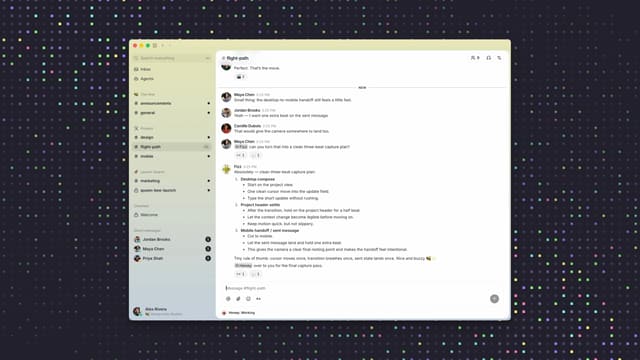
The Developer Preview already shows me a great deal of potential. The interface makes the plugin principle tangible, while the Trajectory view shows that traceability is intended from the start rather than added later. The project is still young and much is changing, but this open architecture feels like a foundation on which something substantial could emerge very quickly.
So much is happening in AI right now that even a gap of a few weeks can look old. Is that surprising when Alphabet alone expects capital expenditure of $175 billion to $185 billion in 2026 and Meta another $115 billion to $135 billion, in both cases heavily shaped by AI infrastructure? Hundreds of billions are suddenly flowing into the same idea, the same competition, and the same future.
That capital does not guarantee good products. But it explains why models, data centers, and agent platforms are advancing at a pace that seemed impossible only a few years ago. Models are becoming more interchangeable, open weights are catching up quickly, and the decisive differentiation is moving into the harness. DeepSeek is visibly accelerating on all three fronts. Anyone building AI infrastructure should see this not merely as a Chinese competitive story, but as an invitation to reassess their own dependence on closed stacks.
Until next time,
Joe
Sources
- DeepSeek: Harness Developer Preview, product images, and architecture overview
- DeepSeek Harness on GitHub: source code, installation, and MIT License
- DeepSeek Harness documentation: architecture and session log
- DeepSeek Harness documentation: plugin installation and build risks
- DeepSeek V4 Pro: model card, weights, license, and benchmarks
- Cordis: paper on dynamic component composition
- Alphabet: 2026 capital expenditure outlook
- Meta: 2026 capital expenditure outlook