Majorana 2: Progress or Quantum PR?
Ai Security NetworkTable of Contents
With Majorana 2, Microsoft has created exactly the kind of moment we know from the quantum computing world: a big number, an ambitious timeline, and a promise that sounds like the future.
20 seconds of qubit lifetime. Up to one minute in individual measurements. 1,000 times more reliable than the previous generation. A scalable quantum computer by 2029. On top of that, Microsoft Discovery, an agentic AI platform that supposedly helped accelerate research, material development, and measurement workflows.
That sounds like a breakthrough.
But with quantum computers, that is precisely the dangerous part. Not because the progress is irrelevant. It is dangerous because there is still a lot of physics, engineering, and reproducibility between an interesting measurement signal and a practical, fault-tolerant quantum computer.
Majorana 2 is exciting, but it is not yet proof that Microsoft’s risky quantum path really works.
That does not mean I find the chip uninteresting. Quite the opposite. If Microsoft’s approach works, it would be a very elegant route toward more stable qubits. But the public communication is again much more confident than the scientific situation.
That is exactly why a sober look is useful.
Why quantum computers are so hard
Classical computers work with bits. A bit is either 0 or 1. Quantum computers work with qubits, meaning quantum states that behave differently: superposition, interference, and entanglement are not just faster versions of classical logic, but a different way of processing information.
That is why quantum computers are interesting for certain classes of problems. The usual examples are material simulation, chemistry, optimization, cryptography, and scientific models where classical computers quickly hit limits.
But that does not mean a quantum computer is simply a faster laptop. It will not replace a normal server, firewall, browser, or database. It would be a specialized tool for certain calculations, probably tightly coupled with classical high-performance systems and cloud infrastructure.
The real hurdle is not only the number of qubits. It is quality.
Qubits are extremely fragile. Heat, material defects, electrical noise, magnetic fields, radiation, and measurement noise can destroy quantum states. Many quantum processors therefore have to be cooled to temperatures close to absolute zero. 0 Kelvin equals -273.15 degrees Celsius and cannot be reached exactly in practice, but quantum hardware operates very close to it.
For a useful quantum computer, it is not enough to create some quantum state. You have to control it, measure it, couple it with other states, correct errors, and scale the whole system. That combination is what makes the field so difficult.
What Microsoft wants to do differently with Majorana
Microsoft has been pursuing topological qubits for many years. The idea is seductive: if information is not stored only in one fragile local state, but protected by the structure of the system, certain errors could be less likely from the start.
The approach depends on so-called Majorana states or Majorana zero modes. For quantum computers, these are not ordinary particles in the everyday sense, but quasiparticles in special semiconductor-superconductor structures. Simplified, the goal is to create states that make quantum information more robust to store and read out.
In theory, that is powerful. Topological quantum computers could need less error correction than many other platforms. That would be a massive advantage because error correction in quantum computing is expensive: many physical qubits are needed to build a few reliable logical qubits.
But this is exactly the catch: proving such topological states in real devices is hard. Other, less exotic effects can produce similar signals. And when a signal is ambiguous, a strong press release is not enough.
What is new in Majorana 2
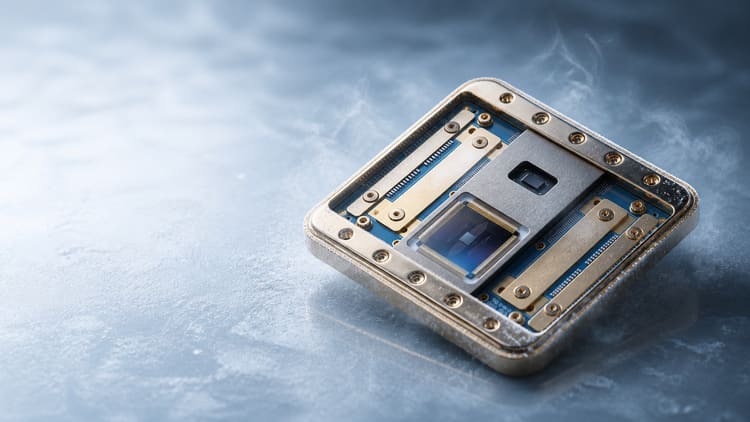
Majorana 2 is Microsoft’s next generation of this approach. According to Microsoft, the material architecture was changed: instead of aluminum, the new studied structure uses lead as the superconducting layer. The technical preprint discusses an InAs-Pb tetron, a structure based on indium arsenide and lead.
The key facts are easy to summarize:
- Material: lead instead of aluminum as the superconducting layer.
- Device: an InAs-Pb tetron made from indium arsenide and lead.
- Lifetime: about 20 seconds of characteristic parity switching time, with individual events in the minute range.
- Energy gap: according to the preprint, around 70 microelectronvolts in InAs-Pb devices, compared with about 30 microelectronvolts in earlier InAs-Al devices.
The most important point is the parity lifetime. Compared with earlier aluminum-based devices, that would be a big step.
The preprint also reports a larger topological energy gap. Roughly speaking, that gap matters because it is linked to the robustness of the desired state.
If this interpretation holds, it would be technically relevant. A longer parity lifetime can make measurements and error correction easier. A larger gap can be an indication of more robust states. A better material system can be real engineering progress.
The problem is that this does not automatically mean a scalable topological quantum computer is just around the corner.
Parity lifetime is not automatically qubit lifetime
Microsoft communicates the 20 seconds very aggressively as qubit lifetime. That equivalence is one of the most critical points.
In a classical computer, it would not be impressive if a bit stayed stable for 20 seconds. Classical bits can last much longer in memory cells, flash, or storage media. With qubits, the comparison is different because coherent quantum states and usable operations are involved. Still, the distinction has to stay clean:
- A long parity lifetime is an important signal.
- A stable, controllable, fault-tolerant qubit operation is more than that signal.
- A logical qubit in a scalable architecture is another level again.
From a network perspective, it is a bit like a link LED on a switch. If it lights up, I know something is happening on Layer 1. But I do not yet know whether DHCP works, routing is correct, TCP passes cleanly, or the application is usable in the end.
This is not nitpicking. These distinctions decide whether we are talking about an interesting component, a good experiment, or a practically useful computer.
For me, Majorana 2 is therefore best understood as a building block, not a finished answer.
Why the criticism is so strong
The skepticism does not come from nowhere. Microsoft’s Majorana program has history.
In 2021, a high-profile Nature paper from Microsoft’s orbit had to be retracted. Later work, and especially the communication around Majorana 1, was also criticized by external researchers. In 2025, Microsoft published a Nature paper on interferometric single-shot parity measurement in InAs-Al hybrid devices. The paper itself discussed that the measurement does not unambiguously distinguish between topological and trivial origins.
On June 24, 2026, Henry F. Legg published a formal criticism in Nature. He analyzed transport data behind the Majorana 1 approach and argued that the claimed parity measurement was made in regions that look strongly disordered and apparently gapless. That would weaken the topological interpretation and make more trivial explanations more plausible.
His earlier arXiv comment on the Topological Gap Protocol pointed in a similar direction: the protocol is sensitive to measurement ranges, parameters, data resolution, and definitions. In short: if small methodological choices strongly influence whether a device is considered topological, that is not a robust foundation for very large claims.
Microsoft disagrees. In the Nature reply, the team argues that its RF interferometry measurements do not simply assume a gap and that a gapless system would not produce the stable observed signal in this way. That matters because it shows the debate is not just “Microsoft says something, critics wave it away.” There is a real technical dispute.
But for public interpretation, the key point remains: the existence and technical usability of the desired Majorana states are not as uncontested as Microsoft’s product communication sounds.
One strong signal is not enough
What makes me cautious about Majorana 2 is not the idea. The idea is fascinating. It is also not a problem when a company pursues a difficult special path. Research needs exactly those kinds of bets.
The problem appears when a finding that has not yet been independently confirmed turns into an almost finished timeline.
Scientific American quotes external researchers with clear criticism: the new work is a preprint, not yet peer-reviewed, and the data basis looks too narrow for the size of the claim. The central concern is reproducibility. If surprising behavior is based on a few measurements or a few regions of one device, it can be a breakthrough. It can also be an artifact, a special defect, or a favorable selection.
We know this pattern from many areas of technology. A benchmark on one device is interesting. A reproducible effect across many devices, many batches, several labs, and different measurement setups is stronger. For a roadmap to 2029, Microsoft needs exactly that second category.
Until that exists, Majorana 2 should not be read as final proof, but as an interim result with a high drop.
The AI part is less spectacular than it sounds
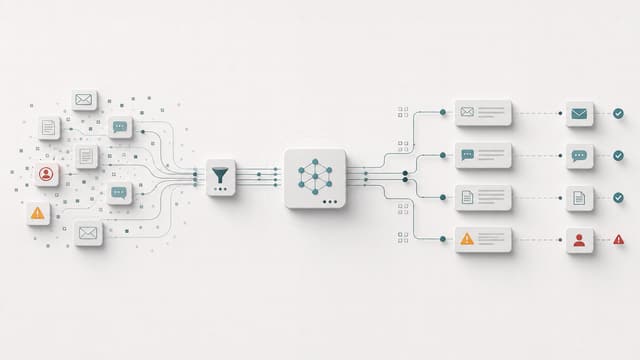
Microsoft strongly emphasizes that Majorana 2 was developed with the help of Microsoft Discovery and agentic AI. The AI is said to have automated measurements, evaluated fabrication data, proposed hypotheses, and accelerated workflows.
That is plausible. Modern research produces enormous amounts of data. If AI helps search parameter spaces faster, automate measurement workflows, or document material processes better, that is useful.
But here as well: AI does not replace physics.
An agent can sort measurement data. It can find anomalies. It can make suggestions. It can accelerate scientific work. But in the end, the device has to work reproducibly, the measurement has to be clean, alternative explanations have to be excluded, and independent groups have to be able to reproduce the result.
Especially in a topic that is already prone to hype, the AI story should not be overrated. It can make the lab faster. It does not automatically make an ambiguous measurement signal unambiguous.
What this means for security and infrastructure
For admins, network engineers, and security teams, the most important answer for now is: operationally, nothing dramatic.
Majorana 2 is not a quantum computer that will break TLS, VPNs, SSH, or signatures tomorrow. There is no reason to panic-change certificates, firewalls, or encryption procedures because of this announcement.
But it would be just as wrong to dismiss quantum computing as mere marketing theater. In the long term, the cryptography question is real. A sufficiently large, fault-tolerant quantum computer could threaten certain public-key systems used today. That is exactly why post-quantum cryptography migrations are already underway independently of Microsoft’s Majorana timeline.
The right operational posture is therefore boring, but sensible:
- inventory cryptographic dependencies,
- know TLS, VPN, SSH, S/MIME, and signature methods,
- watch vendor roadmaps for post-quantum support,
- do not buy proprietary “quantum safe” promises without checking them,
- follow hybrid methods and standards,
- treat especially long-lived secrets separately.
The point about long-lived secrets is important. Some data must not only be protected today, but also in ten or twenty years. For such data, “store now, decrypt later” is a real scenario: attackers store encrypted data today and hope to decrypt it later with better technology.
Majorana 2 does not change that deadline. But the chip is a reminder that cryptography roadmaps should not start only when a vendor holds a finished quantum computer in front of a camera.
The market loves big year numbers
Microsoft now speaks of 2029 for a scalable quantum computer. IBM also communicates ambitious roadmaps. Google, start-ups, research institutes, and governments are investing heavily. Market forecasts vary enormously depending on the source, but the common denominator is clear: quantum computing is strategically important, expensive, and full of expectations.
That is exactly why we have to be careful with years.
Infrastructure people know the pattern. A vendor shows a roadmap. A number lands in the media. In perception, “we want to” quickly becomes “it is coming.” A research goal becomes a product promise. A measurement value becomes a breakthrough.
With quantum computers, this shortcut is especially risky because the intermediate steps are hard to see. A normal reader sees “20 seconds” and “2029.” The real debate is about parity, topology, energy gaps, parasitic states, material defects, error correction, measurement protocols, and scaling.
That is not sexy. But that is exactly where the truth is decided.
The checklist for real quantum breakthroughs
I do not want less research on Majorana 2. I want more evidence. For a real breakthrough, Microsoft would mainly have to deliver these points:
- Independent reproduction: Not just one impressive device, but multiple devices, multiple batches, ideally external labs.
- More open raw data: Especially when a measurement protocol is so heavily debated, transparency helps more than PR certainty.
- Clear language: Parity lifetime, qubit lifetime, coherence time, logical qubit, and scalable computer are not interchangeable terms. If Microsoft blends these terms too generously in public, the communication loses trust.
- Peer review before roadmap triumph: A preprint may be ambitious. A product message may be proud. But anyone promising a scalable quantum computer by 2029 should communicate the scientific uncertainty more openly.
- Less “breakthrough,” more milestone: Majorana 2 can be an important milestone without turning it into an almost finished computer.
My take
To me, Majorana 2 is neither nonsense nor a finished breakthrough.
It is an interesting advance in a risky research program. The longer parity lifetime and the material shift to lead are technically relevant. If Microsoft can reproduce, extend, and independently confirm these results, something very important could come from it.
But the current evidence does not yet carry the full grand narrative. The criticism of Majorana 1, the Topological Gap Protocol, and the interpretation of the measurement data is too concrete to dismiss as ordinary complaining. Microsoft has answers, but answers are not the same as independent confirmation.
For security teams, the lesson is therefore not panic, but discipline.
Prepare post-quantum cryptography: yes. Know cryptographic dependencies: yes. Make hype-driven purchasing decisions: no. Treat Majorana 2 as finished proof of a quantum computer by 2029: also no.
Maybe Microsoft’s special path will turn out to be right in the end. Scientifically and technically, that would be enormously exciting.
But until then, the rule is simple: a quantum chip may fascinate. It still has to prove that it is more than a good signal in a very good press story.
Until next time,
Joe
FAQ
Is Majorana 2 a finished quantum computer?
What does Microsoft claim about Majorana 2?
Why is Majorana 2 controversial?
Do admins need to change cryptography immediately because of Majorana 2?
Sources
- arXiv: 20 Second Parity Lifetime in an InAs-Pb Tetron Device
- Nature: Interferometric single-shot parity measurement in InAs-Al hybrid devices
- Nature: On the robustness of topological gap detection via transport
- Nature: Reply to: On the robustness of topological gap detection via transport
- arXiv: Comment on InAs-Al hybrid devices passing the topological gap protocol
- Scientific American: Microsoft’s new quantum computer chip has a fundamental problem
- Nature: Majorana zero modes and topological quantum computation