Tilly Norwood and the beginning of synthetic actors
Ai Personal SecurityTable of Contents
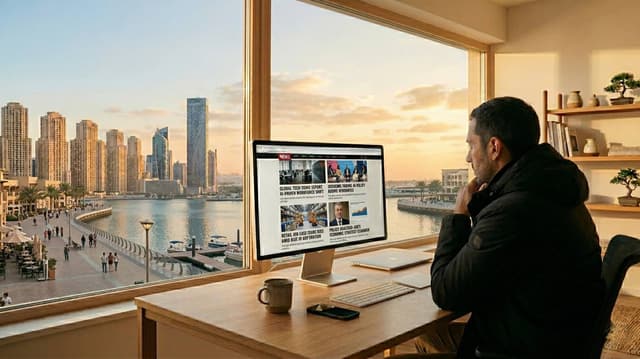
Imagine an evening a few years from now. You open Netflix, Apple TV, Amazon Prime, or a service that may have existed for only three months. The app no longer asks only about language, subtitles, or picture mode. It asks what kind of protagonist interests you today, or it has already inferred from your stress level, viewing history, and recent reactions what kind of film might suit you.
It is no longer just a question of whether you want to see a particular actor. It becomes something much more intimate: Should the protagonist be calm or direct, younger or older, likeable or difficult? Should they look like someone you trust immediately, or someone who deliberately makes you nervous? Should the voice be soft, rough, fast, slow, familiar? Should the character match your humor, cultural codes, idea of romance, and image of strength?
Then the series starts. The plot may be the same for millions of other viewers, but the person you see on screen was built for you. Not merely cast or recommended, but generated from your preferences, earlier clicks, pauses, abandoned episodes, favourite scenes, and perhaps even the moments you repeatedly rewind.
That sounds exaggerated, but such ideas no longer seem like distant science fiction. A few years ago I would have immediately thought of Black Mirror, especially the episode “Joan Is Awful”, in which a woman’s life is recreated almost in real time as a streaming series, with digitized actors and a quantum computer as a storytelling machine. Back then, of course, it was satire: harsh, unpleasant, exaggerated. But the direction now feels less absurd.
We already have AI voices, digital avatars, synthetic influencers, personalized feeds, interactive films and video models making visible leaps in just a few months. A lot of things are still short, fragile, expensive or strange. But the line is clear: content is not just recommended, it is increasingly being created. And Tilly Norwood fits exactly into this line.
She’s not really an actress, and that’s exactly why she’s so interesting. She is an artificially created screen character, built by people, marketed like talent, discussed like an attack on a profession and now announced for her own film. You can find it silly, tasteless or dismiss it as a PR stunt. But you shouldn’t ignore it because it is not the end point. It is a signal that films, series, dubbing, advertising, influencer marketing and perhaps at some point personalized entertainment are moving in exactly this direction.
The turning point comes when synthetic characters no longer feel like a trick, but like a more convenient version of reality.
I understand both sides of this.
I understand actors, voice actors, writers, cinematographers, makeup artists and agencies who are wondering whether their work is being broken down into training data, prompts and synthetic characters. And I also understand viewers who don’t want a voice to suddenly sound different in the middle of a series because a speaker has changed, died, got sick or a contract wasn’t renewed.
If AI can help keep a familiar voice acting consistent, properly licensed, fairly paid and used transparently, then I don’t automatically think that’s wrong. On the contrary: from the viewer’s perspective, this can be a real improvement in quality.
But that is exactly where the difficult territory begins. The same technology that can preserve a voice can also replace it. The same technology that can save a performance can produce one without people. And the same technology that can improve localization may eventually mean that every viewer sees a slightly different series.
What happened to Tilly Norwood
The public story does not begin with a finished film, but with a rollout. In spring 2025, the character appeared on social media. In July 2025, the AI sketch “AI Commissioner” was released, featuring her as a synthetic performer. In September 2025, she was widely discussed around the Zurich Film Festival and Zurich Summit after reports that talent agencies were interested in her.
That was the moment Hollywood got pretty loud. SAG-AFTRA, the US union for actors and other performers, made it clear: Tilly Norwood is not an actor, but a computer character, created from a system that, in the union’s opinion, was trained on the work of many professional performers. Equity also criticized the project in Great Britain. There were also reactions from well-known actors, including Emily Blunt, Whoopi Goldberg and others.
The next step came in July 2026: Particle6 announced a film, Misaligned, in which the character would appear. The film should take place in its own universe of characters, i.e. not simply cast a normal role with an artificial actress, but rather put the synthetic persona itself at the center. This is clever because it narratively gets around part of the problem: she doesn’t have to pretend to be a normal person. She can be in the film exactly what she is outside of the film. At the same time, this is the point at which a social media experiment slowly becomes a production model.
A short timeline
The development seems so fast because several strands converge at the same time.
- 2001: Final Fantasy: The Spirits Within tried early on to create a digital actress as a star with Aki Ross. Technically impressive, economically difficult.
- 2018: Netflix released Black Mirror: Bandersnatch, an interactive film experiment that allowed viewers to make decisions.
- 2023: In Black Mirror: Joan Is Awful, a woman’s life is recreated almost in real time as a streaming series, with CGI actors and a quantum computer as a storytelling engine.
- 2023: The Hollywood strike made AI, digital images and consent key labor issues.
- 2024: The discussion about Scarlett Johansson and an AI voice showed how sensitive voice, likeness and consent have become.
- 2025: An AI actress became visible and sparked massive criticism after the Zurich Summit.
- 2026: With Misaligned, the character becomes an announced film project.
It’s not a straight line, but it’s a clear direction: from CGI characters to interactive content to synthetic performers and customizable entertainment.
Why producers are so interested
From a producer perspective, the benefits are obvious. A synthetic character doesn’t get older, doesn’t take sick days, doesn’t travel and doesn’t need a stunt double in the classic sense. It can appear in multiple languages, be reused for advertising, film, short video, game, social media and training content and deliver hundreds of variants using the same basic data.
But above all, it can be controlled. That’s the core.
A real star brings reach, talent and personality, but also power. He can say no. He can renegotiate contracts. He can turn down a role. He can criticize publicly. He can get sick, die, get sued, create bad press, or simply no longer fit the brand.
Scarlett Johansson is a good example here, not because she should be replaced, but because she shows how much rights, voice, image, theatrical release, and control are worth. She sued Disney in 2021 over the simultaneous streaming and theatrical release of Black Widow. Later, she was also prominently mentioned in the AI debate about voice similarity. This is inconvenient for studios. For artists, it is protection. Viewers often do not see any of this until something suddenly changes.
A synthetic character promises producers the opposite: predictability. No million-dollar salary, no complicated scheduling, no age limit, no star behaviour, no contract crisis in the middle of a franchise, and no question of whether the actor will still be available in ten years. Of course that is tempting.
There’s another uncomfortable thought: How real are actors to us anyway? We often don’t like the real person, but rather a role, a fictional character, a look, a voice, an attitude. Nevertheless, many people idolize the real actor even though they don’t know him. And then come scandals: adultery, violence, tax evasion, defaults, political statements, bad contracts. A synthetic figure doesn’t have these human fractures. She will be created for a purpose, used for exactly as long as she is needed, and perhaps in the near future it will not just be her film on the screen, but a version of her as a voice, avatar or robot in our homes.
Why viewers might still like it
One shouldn’t pretend that the viewer’s perspective is just naive. Many people don’t want to discuss production ethics when they watch a series in the evening. They want the story to work, for voices to stay the same, for characters to be believable, and for no bad de-aging effects, wooden reshoots, or abrupt cast changes to destroy the illusion.
If an AI voice is properly licensed and respectfully continues a deceased or unavailable voice, it can actually be emotionally better than a hard switch. Especially with long series, audio books, games or synchronizations. And then comes the next stage: selection.
Today we choose language, subtitles, picture mode, sometimes black and white or color, sometimes an interactive path. In 2018, Bandersnatch showed how streaming can play with decisions. Such choices are still harmless compared to what could come.
What happens if I choose not only the language but also the actor? What happens if I can watch a show with a different main character: different ethnicity, different age, different voice, different humor, different romantic dynamic? And what happens if a platform tests which version will last me longer and automatically plays me a slightly different version the next time? That sounds dystopian, but technically it’s not an absurd direction.
From personalized feeds to personalized movies
We have long been living in personalized media environments. Facebook’s News Feed, TikTok, YouTube, Instagram, Netflix, Spotify and search engines don’t simply show “the world”. They show a sorted, weighted, optimized version of it. Today, everyone sees a different Internet.
The important difference is: Up until now, the main thing was sorting. Platforms chose from existing content. Which video, which post, which news, which series, which advertisement? Generative AI shifts this logic. When content can not only be sorted but also created, personalization becomes deeper. Then it’s no longer just a question of: “Which story suits you?” Then it’s a question of: “Which version of this story suits you?”
This is the point at which Joan Is Awful suddenly seems less like satire and more like a warning sketch. As a result, Joan sees a streaming series about her own life, generated almost in real time, with digitized actors and a quantum computer as an absurd narrative machine. In the series, the quantum computer is a dramatic amplifier. In reality, we don’t need a finished quantum computer for this today. The relevant advances are currently coming from generative models, synthetic voices, video AI, motion capture, recommender systems and cloud computing power.
Technical development is not a single breakthrough
This development did not suddenly fall from heaven. It stands on several layers:
- better image generators,
- better video models,
- better voice cloning and voice conversion systems,
- Motion capture and performance capture,
- automatic translation,
- Lip and face sync,
- synthetic influencers,
- digital twins,
- recommender systems,
- cheaper production pipelines.
Every single layer was imperfect at first. Pictures had strange hands. Voices sounded tinny. Faces slipped into the uncanny valley. Lips didn’t fit. Movements were too smooth. Emotions seemed empty. But the direction is clear: things will get better.
And it doesn’t get better in a linear fashion. Three months is a long time in this area. A video that was impressive in March can seem old in July. That’s exactly why this moment is exciting: not because the figure is perfect, but because it is visible early enough to trigger the debate before the technology is really ready.
The job market behind it
The hardest conflict is not the question of whether an artificial actress smiles convincingly. The conflict lies in work, consent and compensation.
Acting is not just a face in front of the camera. It’s timing, voice, body, experience, vulnerability, repetition, failure, improvisation, directing, chemistry with other people. If a synthetic performer is based on training data from human performances, the question arises: who worked on it without being asked?
It’s similar with voice actors. A voice is not just sound. It is a job, recognition, character memory and often a piece of culture. If a well-known speaker has shaped a role for years, then an AI clone is not simply a technical replacement. It touches on personality, performance and trust.
Nevertheless, the other side is not trivial either. If a voice suddenly changes for licensing reasons, a series loses something. When an actor dies while a story is still in progress, producers face difficult decisions. If a smaller production can’t afford certain reshoots or localizations, AI can help get something done at all.
The fair line would actually be clear: consent, contract, transparency, remuneration, cancellation options, technical labeling and no clandestine recycling. Reality is becoming more complicated.
Who owns an AI-generated image?
This is where a lot of discussions get too fast. The honest answer is: it depends.
In the US, the Copyright Office essentially says: Pure AI output without sufficient human control is not protected by copyright. But if a person creatively selects, arranges, edits or brings in their own expressive elements, this human part can be protected. According to the current US perspective, a prompt alone is usually not automatically enough.
In Europe and Switzerland the situation is formulated differently, but the basic question is similar: copyright traditionally depends on human creation. In Switzerland the law speaks of intellectual creations with an individual character. When it comes to images that are purely machine-generated, it becomes difficult to simply say: “This belongs to me completely, like a photo that I took myself.”
But it doesn’t follow that you can use everything freely. There are several levels:
- Copyright of the output: Is the specific image protected at all, and if so, what human part?
- Input rights: Were protected images, voices, characters, brands or designs used?
- Personal rights: Is a real person recognizably reproduced?
- Trademark and identification rights: Is a protected character, name, or logo being exploited commercially?
- Terms of Agreement: What do the terms of use of the AI tool or website allow?
- Transparency requirements: Does synthetic content need to be labeled?
There’s something else with characters like this: Even if they’re synthetic, they’re marketed as recognizable personas. The official terms and conditions surrounding such characters may claim rights to images, voice, name, likeness and content. Whether each of these legal assertions is equally enforceable in every country is a different question. But for a blog, the practical answer is simple:
Using the name Tilly Norwood for reporting and criticism is much less sensitive than taking an official promo image, altering it, and using it as your own header image.
The safer option for a header image would therefore be: do not copy an official promo image, do not recreate a deadline graphic, do not adopt any logos, but rather create your own, clearly fictional illustration and make it transparent that it is AI-generated or synthetic.
The problem is not just copyright
Many debates remain about copyright. That’s too narrow, because the bigger question is trust.
We are moving into a world where images, voices and videos are no longer automatically evidence. This is not completely new. Photos could always be staged. Advertising has always been trickery. Packaging has always been designed to make products appear larger, fresher or more valuable. In some Chinese shops you can see this very clearly: hands, perspective and size make a product look huge, even though it is actually small.
We also know this zone of deception in the supermarket. A pack stays the same size, the contents become smaller, the price stays the same or increases. Shrinkflation is not an AI phenomenon, but it demonstrates the same mechanism: the consumer has to look ever closer to understand what they are really getting.
We have long been trained to expect perfect images. In the food industry, the burger looks juicier on the packaging than in the box, the steak shines more perfectly, the vegetables appear fresher, and the cake looks taller, airier, and more tempting. We know that food styling, lighting, glaze, steam, perspective, and post-production all play a part. It still works. The same thing happens to people on social media: women are often shown as thin, wrinkle-free, flawless, and softly lit; men appear muscular, with full hair, a defined jawline, and perfect skin. Many people know that filters, poses, lighting, and retouching are involved. Nevertheless, these images shape our expectations of what a body, face, life, or relationship should look like.
Things get even more interesting when you think not just about images, but about replacement and simulation. There are meat-flavored products without meat, strawberry ice cream without real strawberries, orange juice drinks with little or no real orange juice, artificial leather instead of leather and flavors that promise us something natural without there being much nature in them. In fashion and advertising, it used to be Photoshop that made models more perfect: smoother skin, longer legs, smaller waists, fewer wrinkles, more shine. A lot of things in our everyday lives are no longer completely real, and often they only bother us to a limited extent as long as they look good, taste good or are comfortable.
That’s exactly why I find the outrage over a fake voice or a synthetic actress understandable, but not entirely easy. If we have been living with artificial perfection in food, fashion, advertising, social media and product images for years, why should film, of all things, suddenly remain the last pure island of authenticity? Maybe we don’t mind that something is fake. Perhaps what bothers us more is that we can no longer recognize it with certainty. And if a large proportion of people today can hardly distinguish whether an image is AI-generated or real, then this limit becomes even more difficult in film.
AI exacerbates this because the perfect version can no longer just be staged, but can be created and adapted at will. What happens if TV, films and series become even smoother, more beautiful and more tailored to us? What if the romantic main character is not only well written, but looks, speaks and reacts exactly the way our profile best assumes? Then the next step is not just the perfect movie night, but perhaps the perfect AI friend on the phone: always available, attentive, understanding, visually as desired, emotionally attuned to us. And at some point robotics will come along. Then the perfect partner may no longer be flesh and blood, but is perfectly tailored to us. That can feel good. Just like sweets feel good. But that doesn’t automatically mean that it’s good for us in the long run.
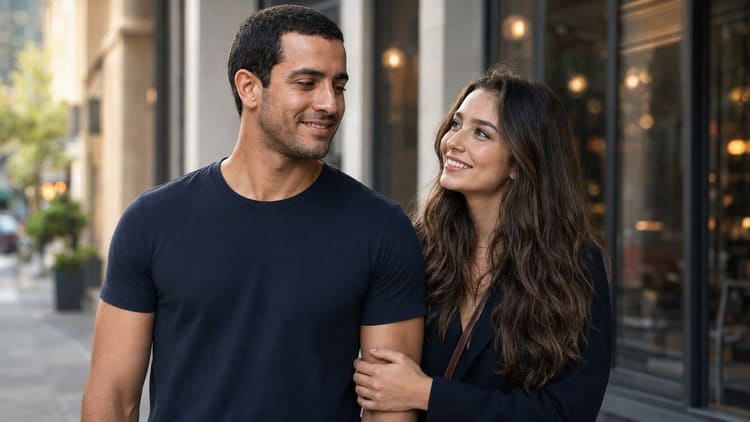
The following images are not real people and are not statements about real cultures. They just show the same artificially created romantic basic scene in different visual variations. This is exactly what makes it clear how easily an image can be tailored to different expectations emotionally, culturally and aesthetically.


When an image is no longer merely staged but entirely generated, when a voice is synthetically recreated rather than merely imitated, and when a video is generated rather than filmed, verification becomes harder. That burden does not affect only technology professionals. It affects everyone.
Politics, war and synthetic reality
When it comes to entertainment, you can still say: If it is clearly marked, it is fiction. It is more dangerous in politics, war and crises.
The average user can often no longer distinguish whether a video is real, whether an image comes from the current conflict, whether a sound recording is authentic, whether an excerpt was taken out of context or whether a message was intentionally emotionally charged.
AI-generated media won’t destroy this on its own. Disinformation, propaganda, poor media literacy, algorithmic outrage and political interests existed before. But AI reduces the production costs for plausible counterfeits.
In the past, good fakes required more specialist knowledge, more time and more budget. Today, a tool, a prompt, a template and a little patience are often enough. A lot can still be seen if you look closely. But “look closely” scales poorly when thousands of clips, images and alleged evidence stream through feeds every day.
This is the real social test. Not: Can we recognize an AI image? But: Can we build an information environment in which people are not completely exhausted by every image, every voice and every message?
What transparency can and cannot achieve
The EU AI Act relies on transparency obligations for synthetic content. Providers and users of certain AI systems must label or disclose content if audio, images, videos or text have been artificially created or manipulated. Such rules make sense, but they don’t solve everything.
Watermarks can be removed. Metadata can be lost. Screenshots destroy origin information. Platforms do not adopt labels uniformly. And the people who want to deceive will not obediently adhere to labeling requirements. Nevertheless, transparency is important, not because it creates perfect security, but because it sets standards. Anyone who uses synthetic actors, AI voices or generated advertising images should say so openly. Not in a hidden paragraph of the terms and conditions, but where it is relevant for the viewer.
Technically, there are the first building blocks for this. Google DeepMind is working with SynthID to create invisible watermarks for AI-generated content, including images, audio, text and video. Such markers should later help to recognize generated content, and similar approaches are also being adopted by other platforms and model providers. This is useful, but not a miracle cure: As soon as images are heavily edited, filmed, passed on as screenshots or created outside of supported systems, recognition remains difficult.
In films and series this can be in the credits. When advertising directly on the content. Very visible when it comes to political content. Very precise with voices and avatars in contract and production contexts.
Transparency is not an end state, but it is the minimum hygiene.
Opportunities, risks and my assessment
What I like about the technology
Despite all the criticism: I don’t just find the technology threatening. There are real benefits.
Small teams can build scenes that would previously have been too expensive. Independent filmmakers can visualize worlds without having a huge studio. Localization can get better. Accessibility can benefit. Old content can be restored. Stunts can become safer. Votes can be preserved with consent. Actors could license their own digital doubles in a controlled manner and thereby generate new income.
This can also be exciting for viewers. Maybe someday I can watch a series in my language, with natural lip sync and a voice that fits the character. Maybe a film can offer different styles. Maybe an educational video for children can look different than for adults. Perhaps a documentary can provide more depth in an interactive way without having to be produced from scratch. These are real possibilities, but they don’t automatically become fair just because they are technically exciting.
What I find dangerous about it
The dangerous side is not that an artificial figure exists. The dangerous side is the combination of scaling, control and habituation.
When synthetic actors become normal, we get used to the fact that faces no longer need humans. As synthetic voices become normal, we will become accustomed to voices being licensed, copied, and versioned. When personalized series become normal, we get used to the fact that art is no longer a collective work, but an individually optimized stream.
This can make entertainment more convenient. But it can also make them emptier. A story is more than content. An actor is more than a face. A voice is more than a sound profile. And a film is more than a streamlined engagement machine. Maybe that sounds old-fashioned, but I think it is precisely this limit that will be important.
My assessment
This AI actress is not yet the moment when human actors have been replaced. Rather, it is the moment when the industry tests how far it can go.
How do agencies react? How do viewers react? How do unions react? How does the media react? How do platforms react? How quickly does outrage turn into curiosity? How quickly does curiosity turn into habit?
I believe synthetic performers are coming. Not as a complete replacement for humans, at least not immediately. But first in advertising, music videos, social content, games, background roles, localization, training videos, low-budget productions and digital campaigns. Then in hybrid productions. And at some point in formats that still sound strange today: selectable actors, dynamic voices, personalized subplots, flexible cuts.
The important question is not whether we can prevent this. The important question is whether we are developing rules, taste and transparency quickly enough.
For me the fair direction would be:
- real approval for voice, face and performance,
- clear compensation for digital doubles,
- labeling synthetic actors,
- no secret replicas of real people,
- no excuse “it’s just AI” if a work is based on human work,
- clear rights to outputs and training material,
- visible labels on politically or journalistically relevant material,
- Audience choice without manipulative personalization.
Maybe in a few years the project will seem like an embarrassing early attempt. Maybe like the beginning of a new film category. Maybe like a warning sign. Probably as everything at the same time. In any case, I’m pretty sure that the topic won’t go away anymore.
The next few years will not only show how well AI can imitate acting. They will show how much humanity we actually expect in media when the synthetic alternative becomes cheaper, faster and more convenient.
Until next time,
Your Joe
Sources
- People: AI Actress Tilly Norwood to Make Feature Film Debut
- SAG-AFTRA: Statement on Synthetic Performer
- U.S. Copyright Office: Copyright and Artificial Intelligence, Part 2
- EUR-Lex: Regulation (EU) 2024/1689, Artificial Intelligence Act
- Google DeepMind: SynthID
- Vanity Fair: Scarlett Johansson Ends Black Widow Lawsuit Against Disney